Diabetes Care

Dr. Gauri Tamhankar
6 min read
Dr. Gauri Tamhankar
Diabetologist | Clinic Founder
Diabetologist & a Lifestyle Disorder Expert | Over 20 years in diabetes and metabolic health. Firmly believes that lifestyle is medicine and every patient deserves a plan built for them.
Share Article:
CGM for Non-Diabetics: Should Everyone Be Tracking Their Blood Sugar?
A small device is making big claims in the wellness world. Here's what the evidence actually says.
Lifestyle Medicine6 min readMetabolic Health
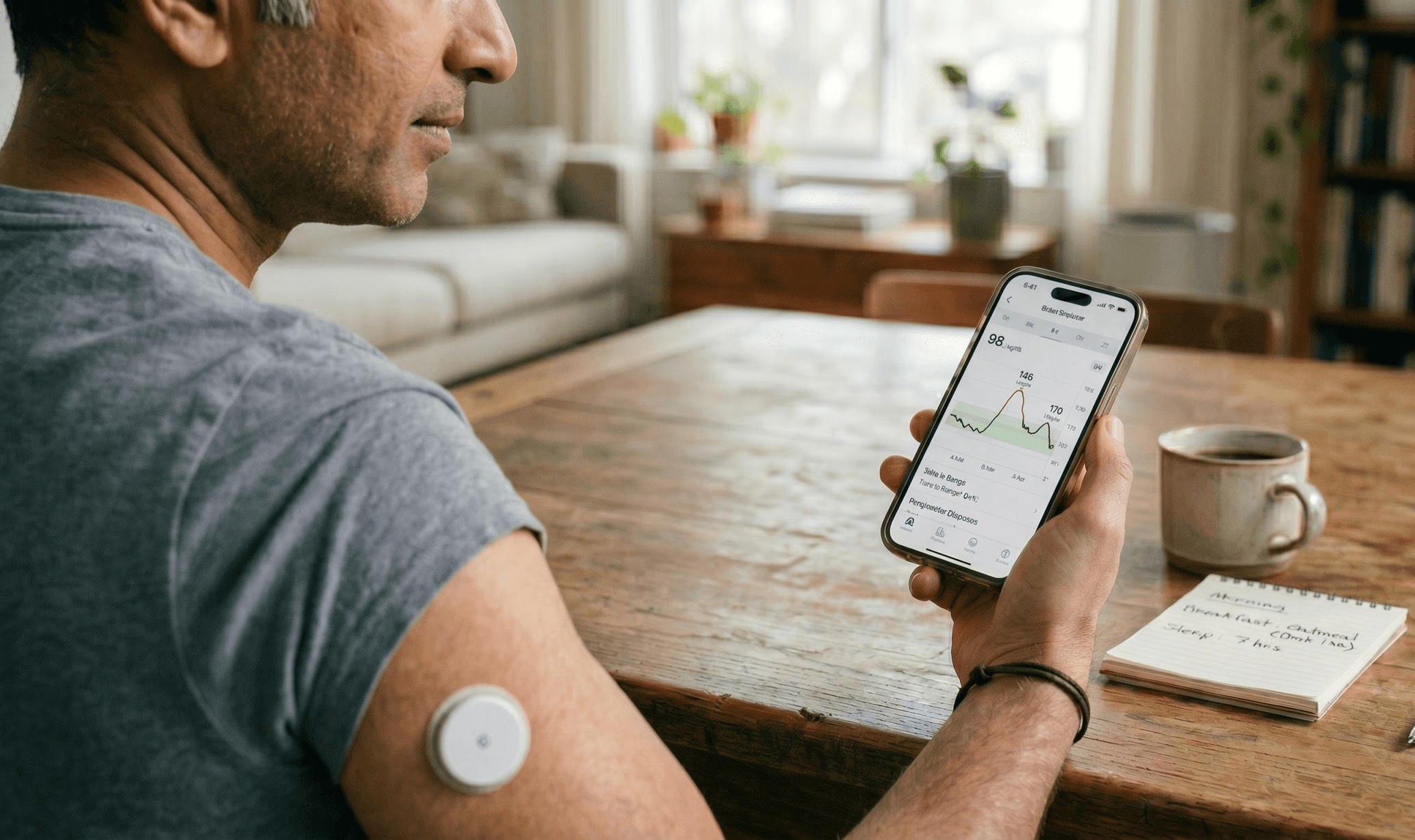
If you follow health and wellness content online, you have probably seen it: someone wearing a small circular sensor on the back of their arm, sharing a real-time graph of their blood sugar over a plate of rice or a morning run. Continuous Glucose Monitors (CGMs) were designed for people managing diabetes. They are now appearing on the wrists and conversations of people with no diagnosis at all.
Companies like Levels Health and Abbott (with its Libre Sense) have built entire consumer offerings around this idea. The pitch is simple: knowing how your blood sugar rises and falls in response to food, stress, sleep, and exercise gives you a window into your metabolic health that a routine HbA1c or fasting glucose simply does not.
It is a compelling argument. But it is worth separating what CGMs genuinely offer from what the wellness industry would like you to believe.
What a CGM actually measures
A CGM does not measure blood glucose directly. It measures glucose in the interstitial fluid the fluid between cells just beneath the skin. There is a natural lag of around five minutes between changes in blood glucose and what the sensor reads. For someone managing insulin doses, this lag matters and is well-understood. For a healthy person using CGM to "optimise" their diet, it is rarely discussed.
The device reads continuously, typically every one to fifteen minutes, and sends the data to an app. What you see is a curve. Peaks after meals called postprandial spikes are the thing most wellness CGM users obsess over.
"The patterns measured by CGM can be used to predict health risks, including diabetes and heart conditions, years in advance but this research was conducted in populations with metabolic risk, not in healthy young adults trying to optimise their breakfast."
The case for broader use
There are genuine reasons to think CGM data can be useful beyond active diabetes management. A meta-analysis of 25 randomised controlled trials found that CGM-based feedback modestly reduces HbA1c levels and increases time-in-range in individuals both with and without diabetes suggesting that seeing your glucose data does influence behaviour, at least in the short term.
For people with prediabetes or those at high metabolic risk family history of Type 2 diabetes, central adiposity, PCOS, non-alcoholic fatty liver a CGM worn for two or three weeks can offer a genuinely useful clinical snapshot. It can show whether postprandial glucose is running higher than expected, whether certain foods are problematic for that individual, and whether stress or sleep deprivation is affecting glucose regulation. These are actionable findings.
Where it genuinely adds value
Clinically useful in these contexts
Prediabetes evaluation- understanding glucose variability beyond a single fasting test
Identifying postprandial patterns before HbA1c becomes abnormal
Personalising dietary advice- individual glucose responses to the same food vary significantly
Motivation tool for lifestyle change- seeing data creates accountability for some patients
Monitoring in early Type 2 diabetes before insulin is initiated
The honest limitations
For genuinely healthy people with no metabolic risk, the evidence for CGM as a routine wellness tool is thin. A normal postprandial glucose spike after a bowl of rice is not a problem. It is physiology. The body is designed to handle glucose rises and bring them back to baseline that is what healthy beta cell function and insulin sensitivity look like in action. Treating every peak as a threat can create unnecessary anxiety and, in some cases, disordered relationships with food.
There is also the accuracy question. CGMs are not perfectly accurate at the low end of the range, where hypoglycaemia becomes a concern for people on medication. For healthy individuals, this is less of an issue — but it does mean that the numbers should be interpreted in context, not treated as laboratory precision.
And cost remains a real barrier. In India, a two-week CGM sensor can run anywhere from ₹2,000 to ₹4,000. That is not a trivial expense for ongoing wellness use, particularly when the clinical yield for a low-risk individual may be minimal.
So, should you wear one?
If you have prediabetes, a strong family history of Type 2 diabetes, gestational diabetes in a previous pregnancy, or unexplained weight gain around the abdomen, a short-term CGM trial under clinical guidance can give you genuinely useful data. It is a diagnostic tool used intelligently, not a wellness gadget used anxiously.
If you are a healthy person curious about your glucose, the more productive question to ask is whether your current lifestyle habits… sleep, activity, diet quality, stress are sound. If they are, a CGM is unlikely to tell you something actionable. If they are not, a CGM might show you symptoms of a problem that a better lifestyle would simply solve.
The device is not the insight. The insight is what you do with it.
If you are interested in a short-term CGM assessment as part of a metabolic risk evaluation, speak with your clinician about whether it is appropriate for your profile. At our clinic, we use CGM data as one layer of a broader metabolic picture not as a standalone verdict.
Recommendations